Spec Campaign
ALAMO DRAFTHOUSE × CURB YOUR ENTHUSIASM
Overview
THE ONLY THEATER THAT ACTUALLY MEANS IT
Every movie theater has a no talking, no texting policy. Alamo Drafthouse is the only one that enforces it — and has thrown out enough people to prove it. This campaign doesn't explain that policy. It personifies it.
Larry David has spent his entire career being the only person who actually enforces unspoken social contracts. The match isn't a celebrity endorsement. It's a personality transplant. Larry David IS the Alamo Drafthouse policy made flesh.
The Match
Most celebrity campaigns ask a famous person to say they love a brand. This one asks what happens when the brand's entire operating philosophy already exists as a person. Larry David doesn't need to be convinced that you should be removed from a theater for talking. He has been making that argument his entire career without anyone paying him to.
The Brief
A POLICY MOST BRANDS WOULD HIDE. ALAMO LEADS WITH IT.
Alamo Drafthouse built its entire identity around a rule most theaters post and ignore. The brief wasn't how to soften that rule for a broader audience. It was how to make the enforcement itself the entertainment — and find the one person whose entire public persona is built on the same refusal to let things slide.
The Creative Challenge
Make a campaign that feels like it couldn't have been made by anyone else, for anyone else, starring anyone else. The constraint is the concept. The policy is the product. The enforcement is the ad.
The Insight
LARRY DAVID DOESN'T ENDORSE ALAMO DRAFTHOUSE. HE IS ALAMO DRAFTHOUSE.
Most celebrity campaigns ask a famous person to say they love a brand. This one asks what happens when the brand's entire operating philosophy already exists as a person. Larry David doesn't need to be convinced that you should be removed from a theater for talking. He has been making that argument his entire career without anyone paying him to.
The insight: the enforcement IS the entertainment. The ejection IS the brand promise. And the only person qualified to deliver both simultaneously is already on television doing exactly that every season.
Why It's Not an Endorsement
An endorsement says "I use this product." This campaign says "I am this product." Larry David isn't performing enthusiasm for Alamo Drafthouse — he's being himself in an environment that was built for him by people who didn't know they were building it for him.
That's a structural match. That's a campaign with a reason to exist beyond budget.
The Campaign
CURB YOUR ENTHUSIASM (AND YOUR TEXTING)
A three-spot campaign structured as Curb Your Enthusiasm cold opens set inside an Alamo Drafthouse. Larry David and Jeff Greene are in the audience. Someone breaks the rules. Larry handles it — first with words, then with Jeff.
Each spot opens with a title card that parodies the show's own format:
Curb Your Enthusiasm (And Your Texting)
Curb Your Enthusiasm (And Your Commentary)
Curb Your Enthusiasm (And Your Phone)
The Ending System
Each spot ends identically. Cut to black. Curb theme plays. Cards appear one at a time:
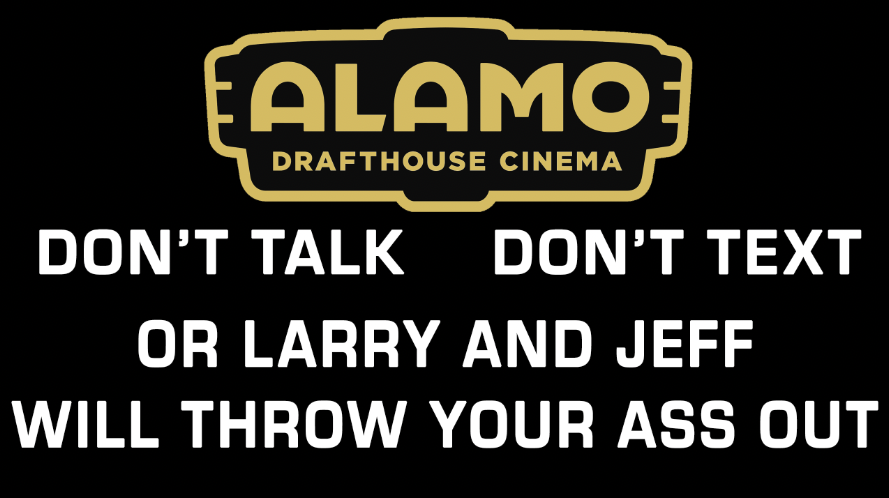
DON'T TALK.
DON'T TEXT.
ONLY ORDER.
Alamo Drafthouse logo.
The identical ending structure turns the campaign into a system — after two spots the audience knows what's coming and waits for it. The anticipation becomes part of the joke.
The Spots
VERSION 1 — THE NEIGHBOR TALKER ↗ READ SCRIPT
Someone is running a full commentary to the person next to them like they're watching at home on their couch. Larry turns. Waits. Issues a warning with complete calm and zero ambiguity. He returns to his seat. They snicker. Larry facepalms. The escort is physical, unhurried, and inevitable.
Larry: "That guy ruined the movie. Why's he gotta ruin the movie."
Jeff: "Ruined the movie. He ruined it!"
Version 2 — The Texter ↗ READ SCRIPT
A phone screen lights up two rows ahead. Then again. Larry squints at the glow and turns to Jeff. He walks down. Issues the warning. Returns. Thirty seconds pass. The phone comes back out. Larry doesn't even look at Jeff. They're both already standing.
Larry: "He knew. He knew what he was doing."
Jeff: "He knew!"
Version 3 — The Phone Call ↗ READ SCRIPT
Someone picks up a call at full voice. Larry's head turns like a tank turret. The guy holds up a finger — one second — to Larry David. Larry gently takes the phone. Says into it: "He'll call you back." Hangs up. "Here's what happens now."
Larry: "He held up a finger. To me."
Jeff: "The finger!"
↑ Click any version title to read the full script
The Storyboard
TEXTER VERSION — FIVE FRAMES
The visual structure of the campaign follows the Curb cold open rhythm: establishing shot, escalation, confrontation, second offense, ejection. Each frame is a beat. The comedy is in the pacing — the inevitability is visible before it arrives.
Frame Structure
Frame 1: The glow. Larry spots it.
Frame 2: The approach. Larry leans in.
Frame 3: The warning. "Put. It. Away."
Frame 4: The second offense. Both standing.
Frame 5: The exit. Jeff. Ragdoll. Door.
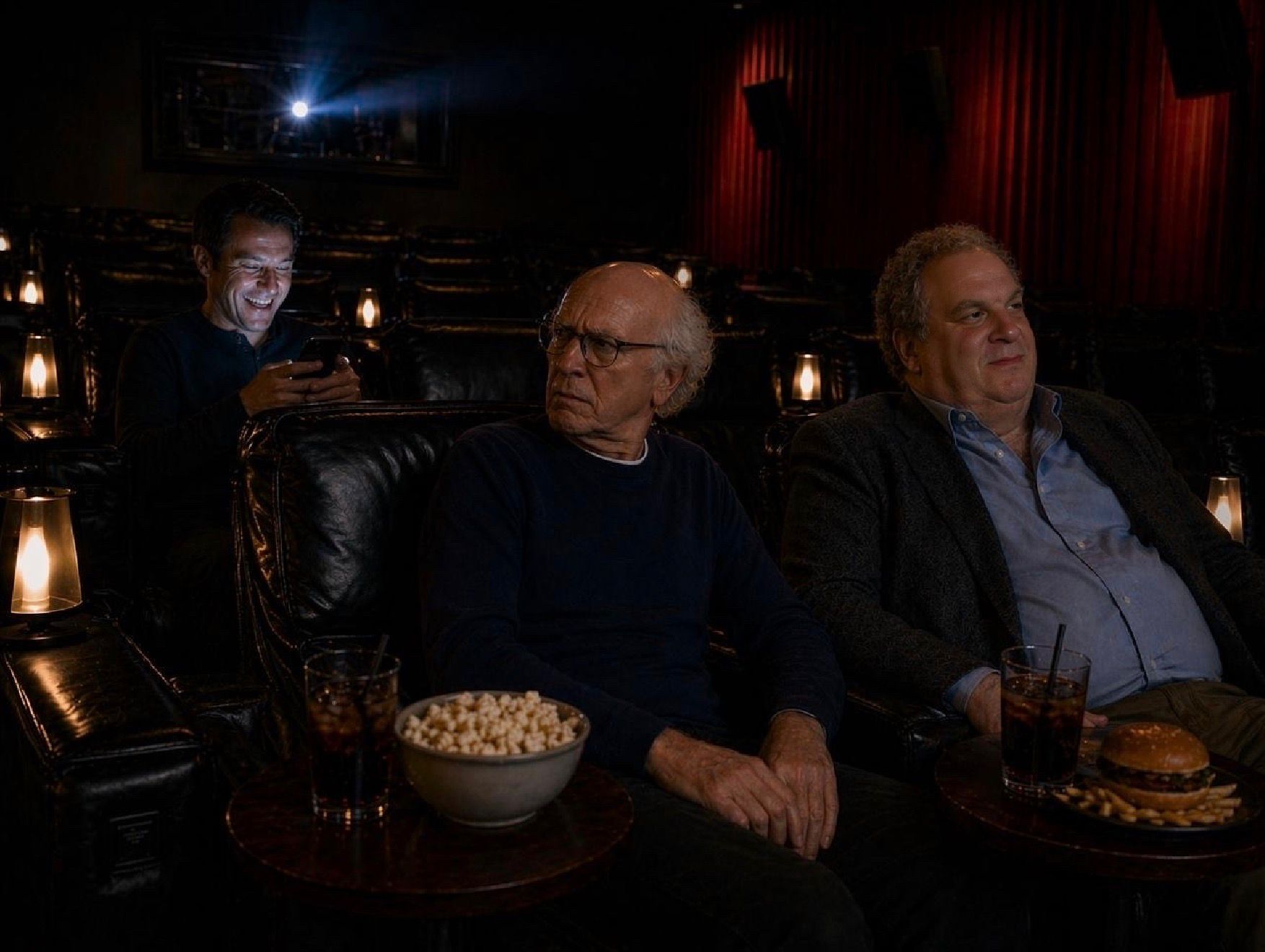
Frame 1 — The glow. Larry spots it.
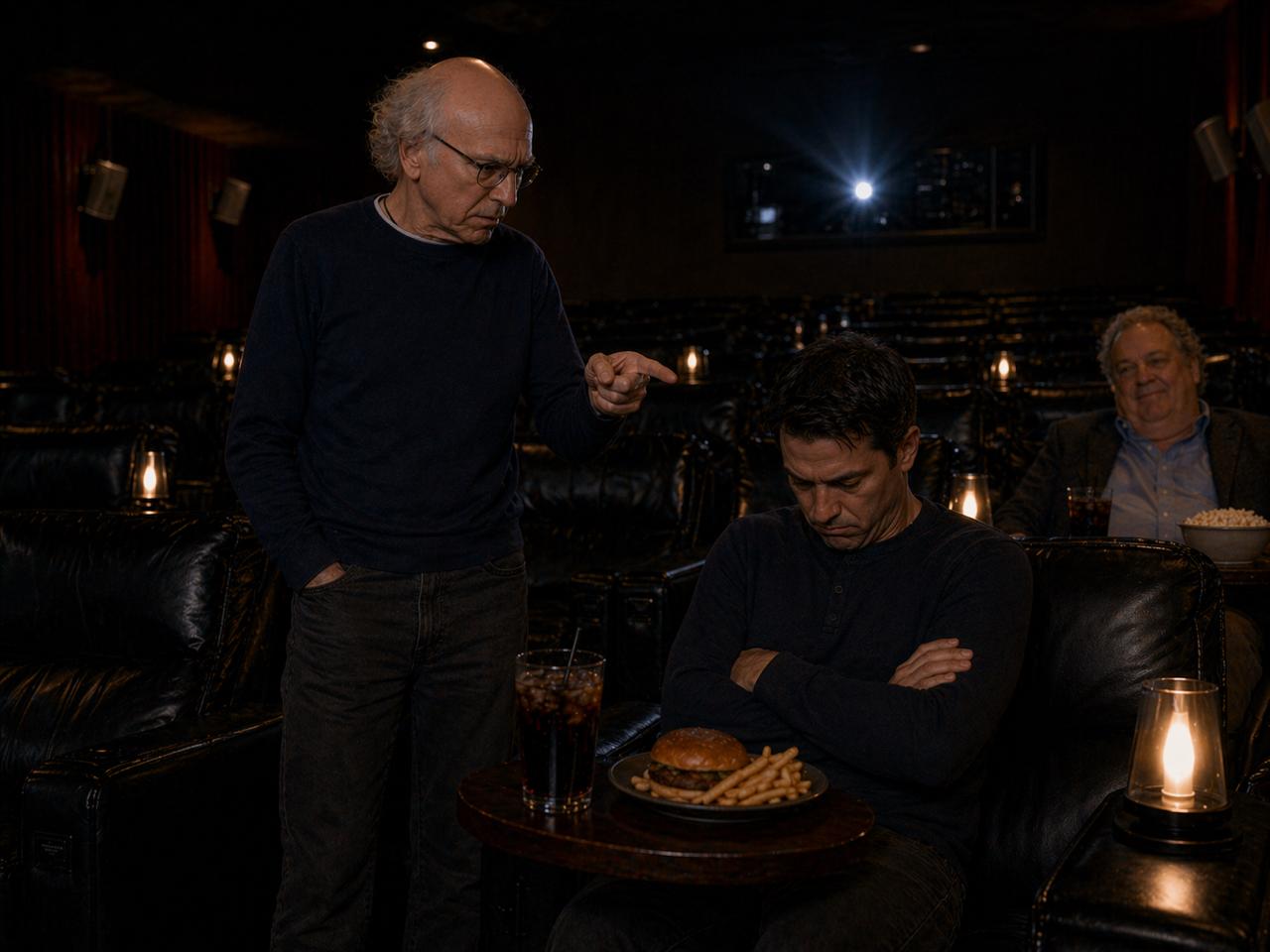
Frame 2 — The approach. Larry leans in.
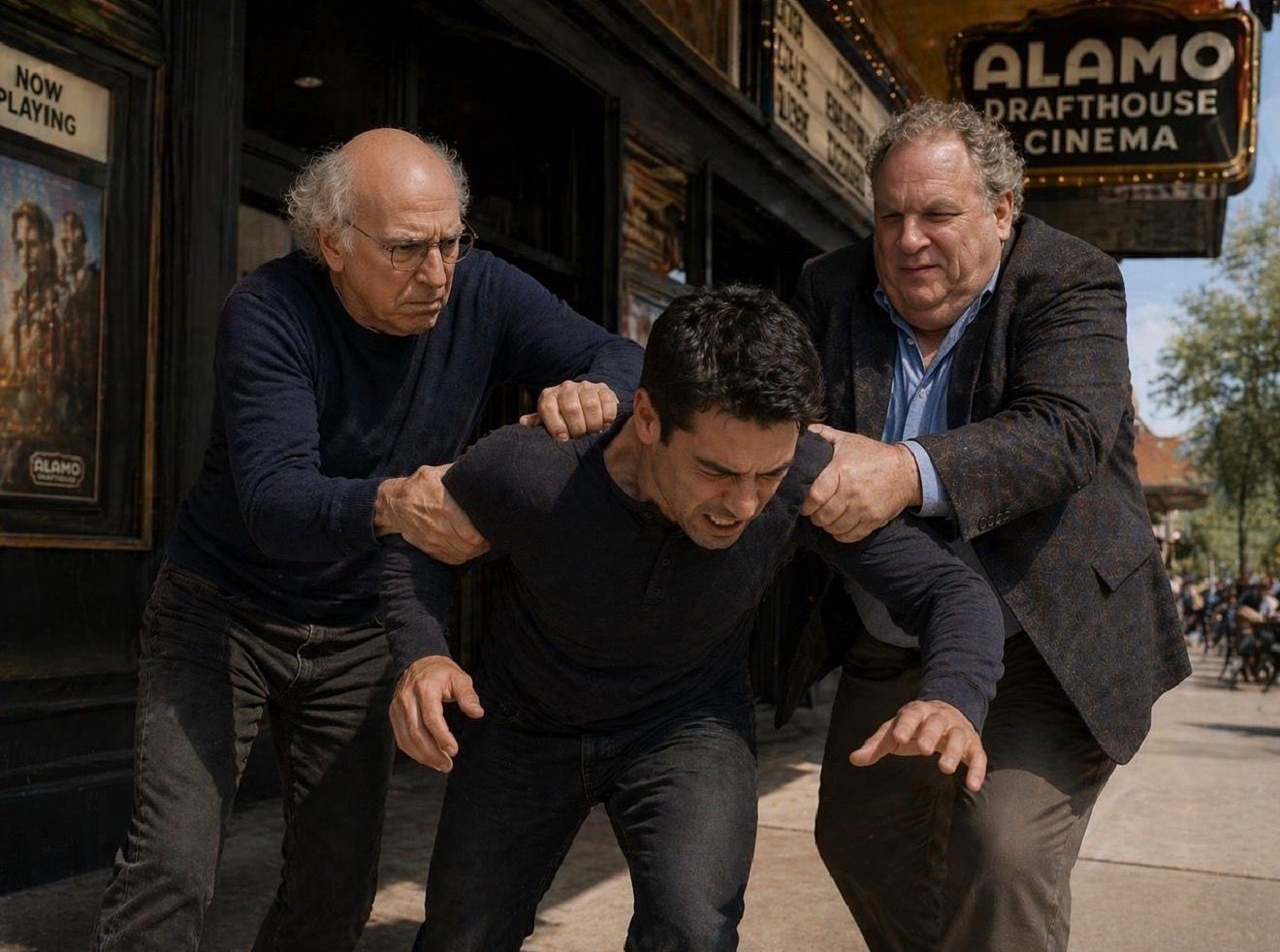
Frame 3 — The warning. "Put. It. Away."
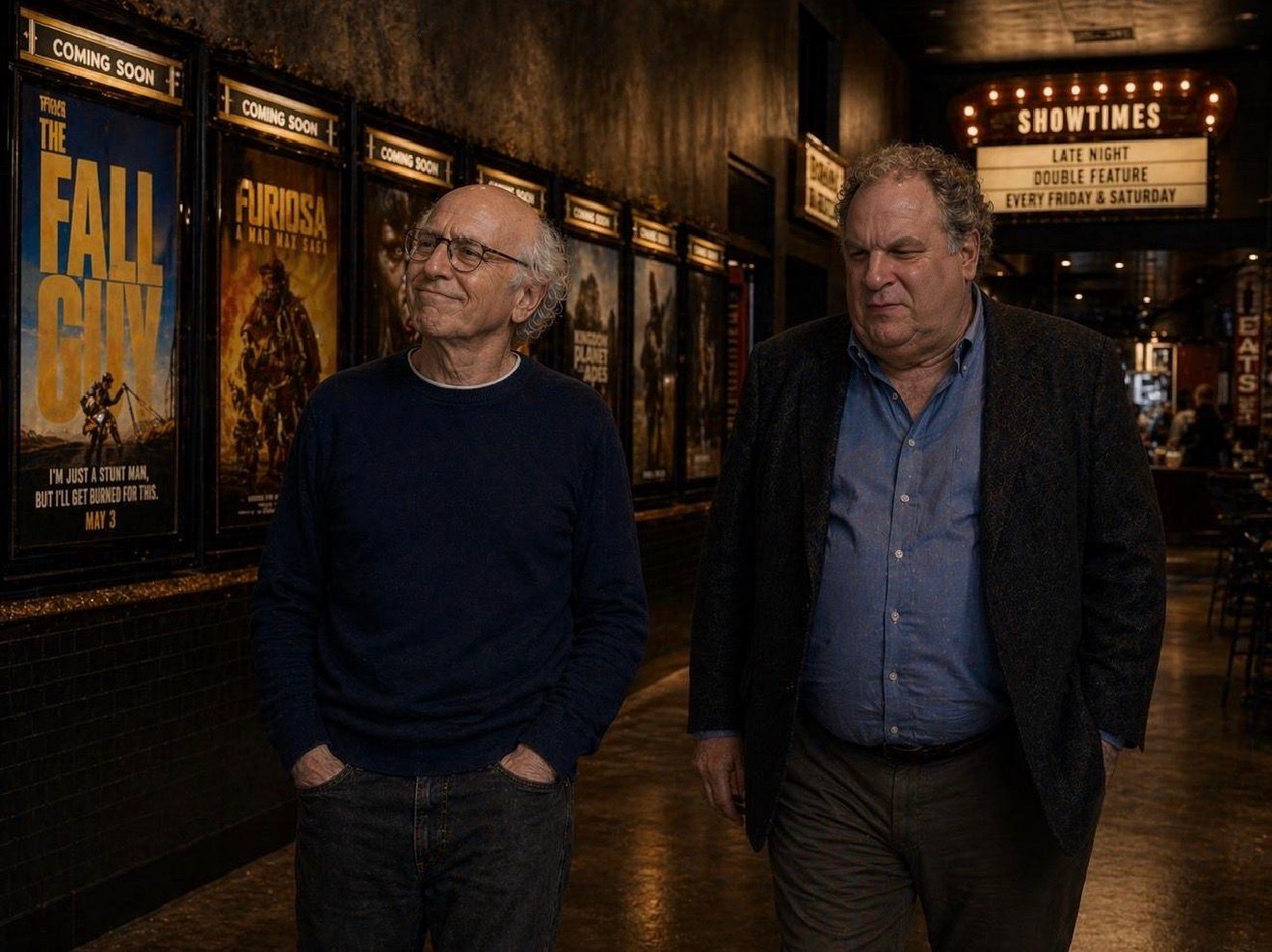
Frame 4 — The second offense. Both standing.
Frame 5 — The exit. Jeff. Ragdoll. Door.
Why It's First and Only
NO OTHER THEATER CAN RUN THIS CAMPAIGN.
AMC can't run it because they don't enforce anything and everyone knows it. Regal can't run it because they don't have the cultural identity to back it up. The joke only works if the policy is real — and only Alamo Drafthouse has spent decades proving it is.
The Curb Your Enthusiasm format appropriation works because this isn't a sponsorship. It's a structural match. The campaign IS a Curb cold open. Larry David isn't playing a character. He's being himself in a situation that was made for him by a brand that was made for him.
The Tagline System
Don't Talk. Don't Text. Only Order. — doubles as the actual theater policy and the brand's entire value proposition. It's a rule that sounds restrictive until you realize the third line is the business model. You can talk to your server. That's the whole Alamo experience. The restrictions exist to protect the thing they're selling.
First & Only
Functions as brand promise, house rule, and exclusivity signal simultaneously. The spots don't explain it. They demonstrate it. First time here? There are rules. Only place like this? Correct.