Cultural Strategy + Writing
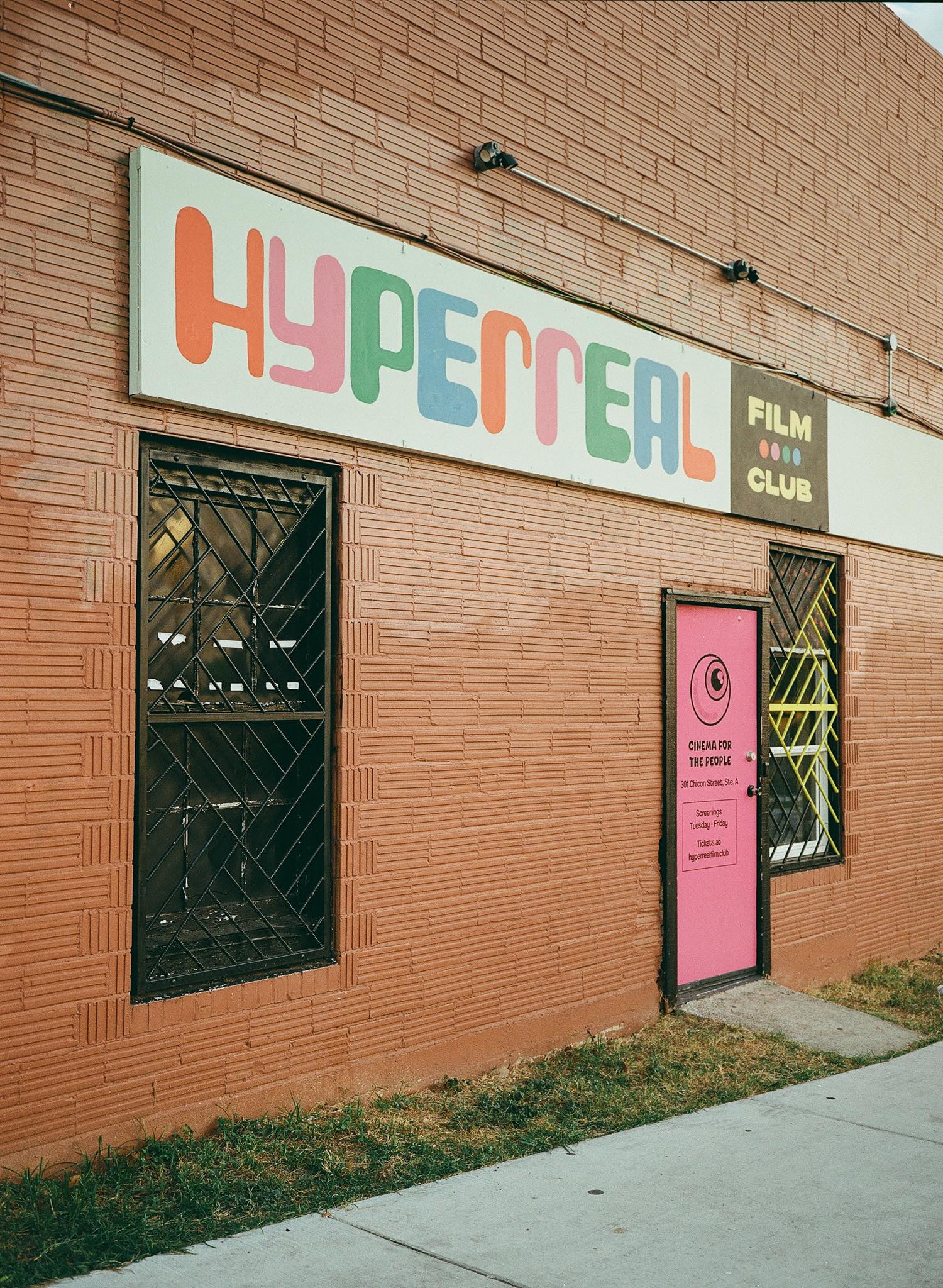
HYPERREAL
Overview
CULTURAL ANALYSIS IS AUDIENCE STRATEGY WITH BETTER MOVIES
Film criticism for Hyperreal Film Club — Austin's cult and independent cinema institution — covering overlooked, disreputable, and misunderstood cinema with an analytical voice that takes the work seriously without losing its irreverence.
The Scope
Four published pieces. One live jury defense to a packed audience. The throughline: understanding why audiences receive things the way they do, and making the case for why the conventional read is often the wrong one.
The Work
WHAT GETS WRITTEN AND WHY
Hyperreal isn't a publication that needs plot summaries. The audience already loves the films — or is about to. What the writing does is reframe: give a curious, culturally literate reader a new entry point into something they either dismissed or never considered.
That's a brief. It's just a cultural brief instead of a brand brief.
Alien: Covenant — Engineering Failure as Horror
The most common read on Alien: Covenant is that the characters are stupid. The actual problem is that they're on the wrong mission — given explorer incentives while operating an infrastructure deployment with zero tolerance for biological contamination. The piece reframes the film's failures as systems failures, using nuclear operations experience to diagnose exactly why every death felt avoidable without the characters being idiots. David the android is recast as the only character correctly modeling human behavior — and therefore the only one who understood the mission's real risks.
Never Talk to Strangers — The Genre Knows What It's Doing
The 1990s erotic thriller is easy to dismiss. This piece argues the dismissal is the point — that the genre's tonal instability, its wobbling between melodrama and genuine psychological tension, is what makes it work for a specific audience and fail for everyone else. The piece maps the audience split as a feature, not a bug.
The Toy (1982) — Live Jury Defense/Cultural SWOT
A five-slide live presentation delivered to a packed Hyperreal audience making the case for reappraisal of a genuinely disreputable film. Built as a structured cultural SWOT — mapping the film's strengths, the source of its dismissal, the opportunity in reconsideration, and the legitimate threats to its reputation — then delivered live to an audience that didn't necessarily agree going in.
Weird Wednesdays: HELP!!! and the Gospel of Controlled Chaos
The standard read on Help!!! is that it's a minor entry in the Johnnie To/Wai Ka-fai canon: uneven, fun, slight. Made in 27 days on a commercial rebound and received that way. The piece argues the 27-day production schedule isn't the caveat — it's the whole argument. The genre swings between Cantonese sitcom comedy, something close to J-horror, and a 1970s disaster movie finale aren't evidence of sloppiness. They're the accurate texture of a hospital, which is the only space humans have designed where comedy and horror are already indistinguishable.
The Approach
CRITICISM AS STRATEGIC THINKING
Every piece starts from the same question a brand strategist asks: why does this land the way it does for the people it lands with, and why does it fail for everyone else?
The Alien: Covenant piece uses nuclear operations systems thinking to diagnose a narrative structure problem that dozens of critics identified as a character problem. The Never Talk to Strangers piece maps audience segmentation inside a genre that most critics treat as monolithic. The Toy defense required building a persuasive argument for a hostile room and delivering it live. The Help!!! piece reframes a production constraint — 27 days, start to finish — as the structural condition that made the film's tonal incoherence not just defensible but accurate.
The Transfer
None of these are just opinions about movies. They are audience psychology applied to cultural artifacts — which is the same skill used to write a creative brief, develop a positioning strategy, or diagnose why a campaign didn't land.
The Context
WHY THIS IS IN A DESIGN AND STRATEGY PORTFOLIO
Hyperreal Film Club operates at the intersection of curation, community, and cultural programming in Austin. Writing for their journal means writing for an audience that is genuinely knowledgeable, genuinely opinionated, and has no patience for conventional takes.
Earning a byline there — and holding a live audience through a jury defense — is a demonstration of the same skills that make strategy work: knowing your audience, building a clear argument, and committing to a position that not everyone will agree with.
The Point
The films are cult and disreputable. The thinking behind the writing isn't.
Published Work
Weird Wednesdays: Never Talk to Strangers — hyperrealfilm.club
Alien: Covenant or How I Learned to Stop Taking the Mission Seriously and Love the Xenomorph — hyperrealfilm.club
The Toy (1982) — The People vs. The Toy — hyperrealfilm.club / Google Drive Presentation
Weird Wednesdays: HELP!!! and the Gospel of Controlled Chaos — hyperrealfilm.club
Back to the Future Is Not About Time Travel. It’s About How Your Family is What You Make It. — hyperrealfilm.club
Weird Wednesdays: Ben and Arthur and the Miracle of Genuine Incompetence. — hyperrealfilm.club