Brand Strategy + Product Design
TXCANNACO
Overview
END-TO-END IN A MARKET THAT PUNISHES MISTAKES
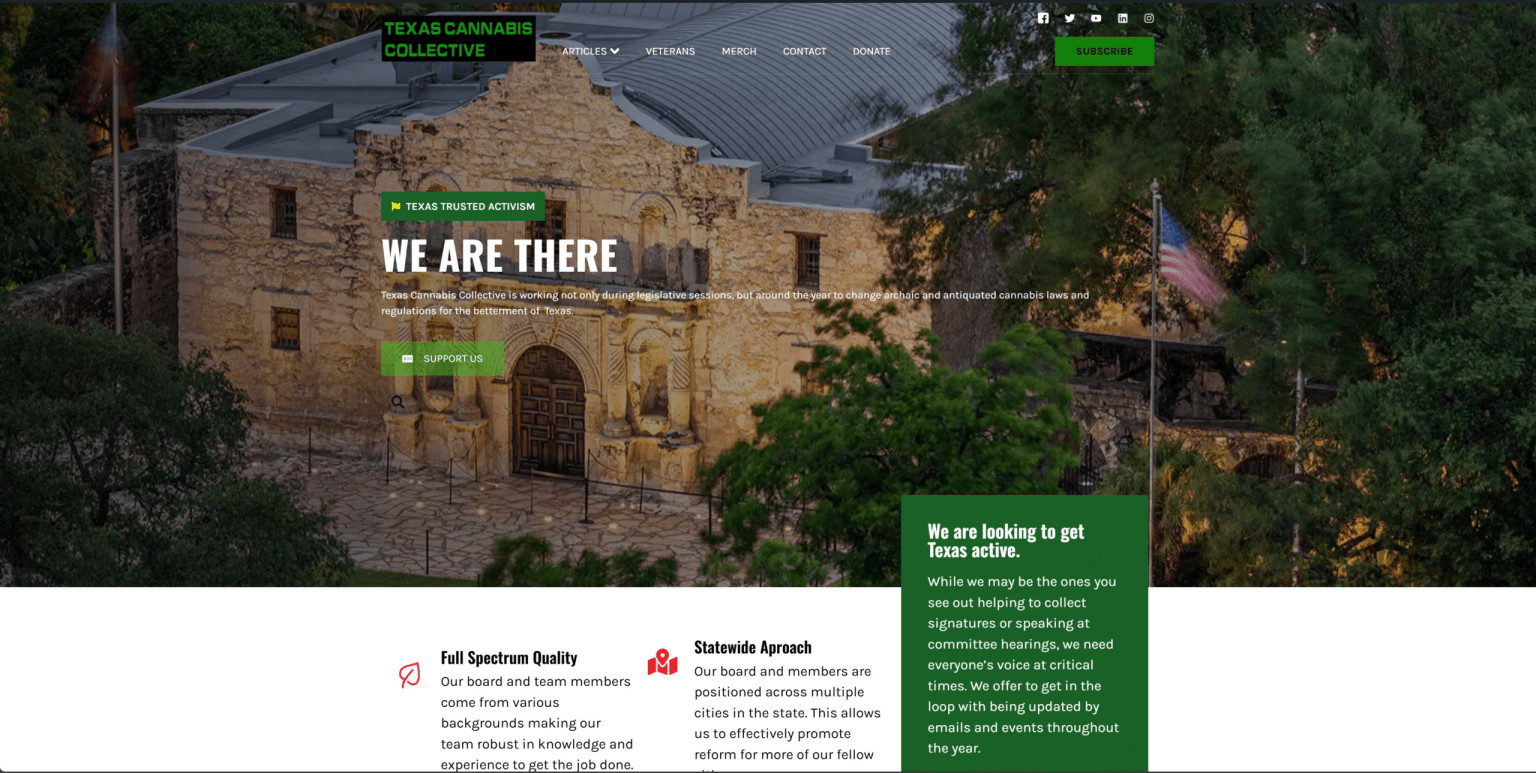
Texas Cannabis Collective operates at the intersection of advocacy, media, and product — building a mobile-first platform for cannabis content and community in a state where the regulatory landscape shifts under your feet.
My work covered the full stack: audience architecture, brand identity, content strategy, community engagement systems, and conversion-focused UX across web and social. Design had to hold up under legal scrutiny and still feel like something people wanted to use.
Brand Strategy
AUDIENCE FIRST. MESSAGE SECOND.
Cannabis audiences in Texas are not monolithic. Medical patients, recreational advocates, policy-focused voters, and culturally curious consumers all required distinct positioning — but the brand needed to hold coherently across all of them.
I collaborated with a board to build an audience architecture — segmented by intent and channel — then developed content pillars and messaging frameworks that could flex without fracturing the brand identity./p>
What This Solved
Most cannabis brands in Texas were too niche to scale or too rigid to last. TxCannaCo solved this by building a brand to outlast any single bill, cycle, or culture shift. The content strategy created a center of gravity — a voice credible enough for advocacy work and accessible enough for cultural engagement.
Legislative Context
4 bills across 3 sessions. Bills blocked, amended, or carried across the finish line. Brand messaging had to respond to legislative cycles without losing continuity — which required a system, not just copy. Brand messaging has to pivot on a moments notice while staying credible and winnable.
Product Design
UX FOR A REGULATED MARKET
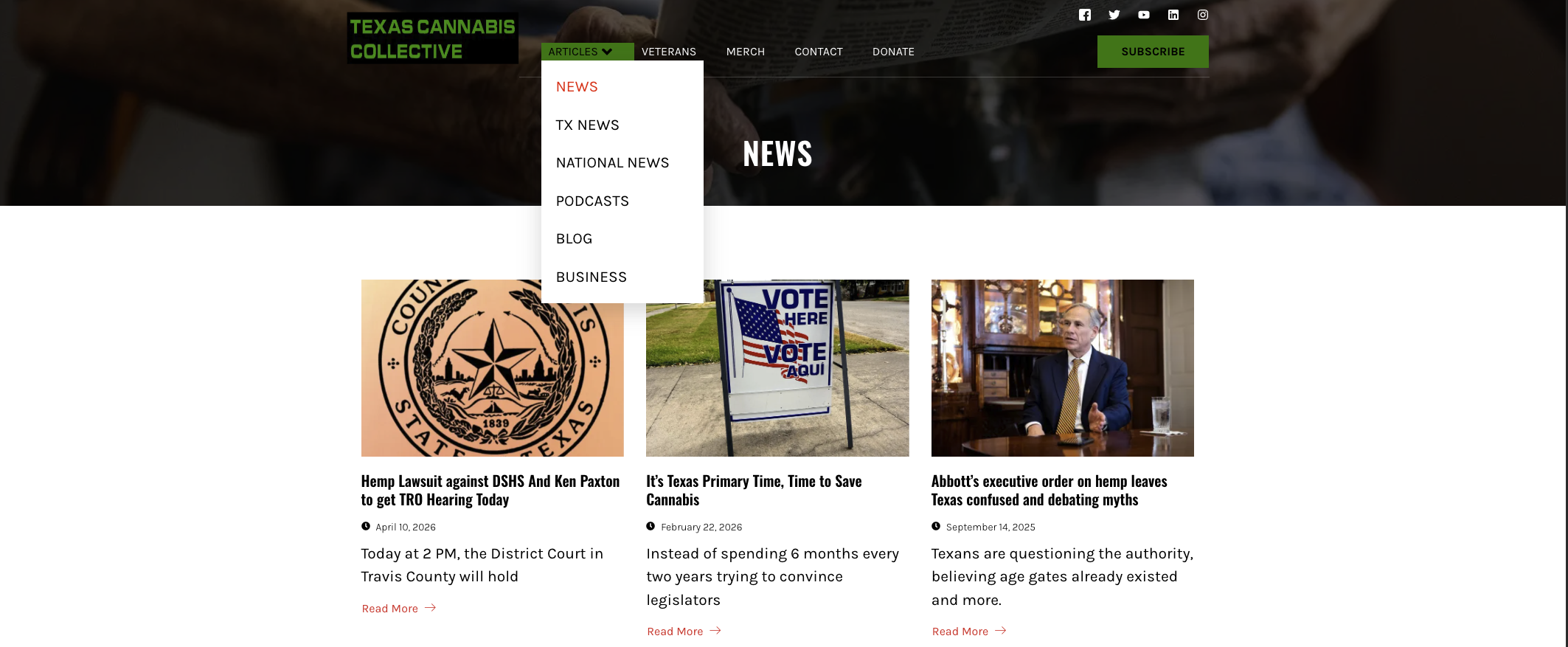
Designing for a regulated industry and a nonprofit means every conversion path, every CTA, every community feature has to survive legal scrutiny and remain credible over time. The constraint isn't just aesthetic — it's structural.
I led design from brand identity through shipped product: component library, mobile-first interaction patterns, and a community engagement system built to scale beyond the initial launch.
I led compliance documentation for a regulated organization navigating evolving Texas law and direct legislative engagement. I established roles and responsibilities across operational and advocacy functions, built risk scoring criteria used in legislative settings, and facilitated cross-functional stakeholder adoption of governance processes - presenting compliance work directly to 30 to 40 state legislators.
Design Principles
Compliance without sterility. The product had to feel human and mission-driven without triggering advertising restrictions or violating the brand's own editorial standards — no vulgarity, no shock imagery, nothing that would undermine credibility with legislators, patients, or the broader community.
Mobile-first, advocacy-ready. Core user flows were designed around real-time engagement — reading, sharing, and acting on legislative updates from wherever the fight was happening.
Enterprise Risk Management My experience for this comes from the United States Navy Nuclear Power Program, where I served as a Licensed Reactor Operator and Work Center Supervisor. That program is an enterprise risk management system in practice. I operated under defined frameworks for risk identification, intake, validation, acceptance, mitigation, and monitoring - with established escalation chains and reporting requirements up to command leadership. I translated complex regulatory procedures into executable workflows, maintained audit-ready documentation under inspection conditions, and coordinated technical stakeholders across concurrent workstreams where a single procedural gap carried serious consequences.

Content System
PUBLISHING AT SCALE
100+ articles published. The content system wasn't just editorial — it was a distribution architecture. Each piece was designed to pull double duty: SEO and advocacy signal, education and community engagement.
I defined the editorial voice, content types, and production workflow that allowed the platform to operate at consistent volume without losing the brand's sense of purpose.
Strategy & Coalition Building
EXECUTIVE CROSS-FUNCTIONAL LEADERSHIP
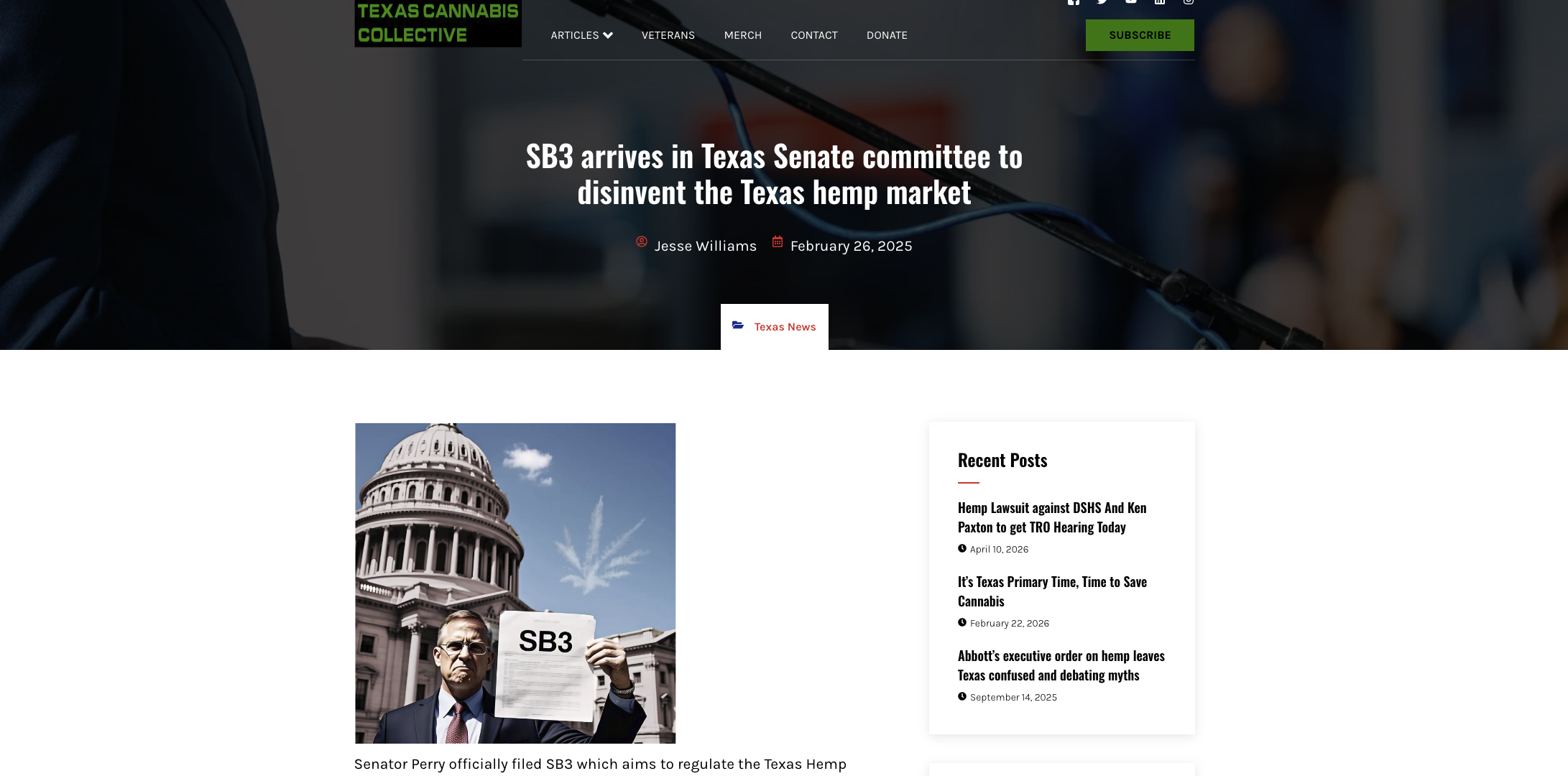
Strategy means nothing if it can't survive the room. Over the course of four bills across three legislative sessions, I operated at the intersection of brand, policy, and coalition — presenting and co-building strategy with a board that included lawyers, medical professionals, activists, and elected officials.
When direction was challenged internally, I closed with working prototypes, documented audience response data, or brought in seasoned political consultants to validate the approach. The sell wasn't persuasion for its own sake — it was proof.
In legislative rooms I drafted talking points, demonstrated messaging techniques, and translated strategy into terms that legislators, their staff, businesses, and the public could act on. TxCannaCo became a recognized presence — legislators and their staff began reaching out directly to board members to request strategy and talking points between sessions.
That work required coordinating across a wide coalition: Ground Game Texas for local initiatives, Grow House Media, regional businesses for sponsorship and vendor coordination, a three-year cannabis march in Fort Worth, and marijuana and hemp organizations at the state and national level for fundraising and awareness campaigns. I also represent veterans' cannabis access needs at the Capitol independently through the Disabled American Veterans.
This wasn't campaign management. It was building the infrastructure that made the campaign possible — and keeping it credible across every room it entered.