Spec Campaign
USAA — "15 MINUTES"
Overview
THE ONLY INSURANCE BRAND THAT EARNED THE RIGHT TO SAY IT
Every major insurance company has a slogan about being there when it matters. State Farm is your good neighbor. Allstate puts you in good hands. Geico says 15 minutes could save you. USAA has no equivalent slogan — because USAA has something none of those companies have. A membership built entirely around people who already know what it means to show up when things get hard.
This campaign doesn't argue with the competition. It lets a veteran walk a new neighbor through a street where the promises were tested — and only one company passed.
The Reframe
The Geico tagline is the sharpest edge in the spot. "15 minutes could save you" becomes the time it took to evacuate — not to shop for insurance — because he already knew USAA had his family covered. A competitor's own tagline recontextualized as the proof that he never needed them.
The competition's slogans indict themselves in the mouth of someone who watched his neighbors live the gap between promise and delivery.
The Brief
TEXAS VETERANS ARE PAYING MORE AND GETTING LESS
Texas has some of the highest auto insurance rates in the country. Veterans returning home from other states face immediate sticker shock — rates that went up the moment they crossed state lines. And when disaster strikes, the gap between what major carriers promise and what they actually deliver becomes impossible to ignore.
The Assignment
Speak directly to Texas veterans about the real cost of not having USAA — not in premium dollars but in what happens when the storm actually comes. Do it without a single statistic. Do it with two veterans standing in a neighborhood that already lived it.
The Insight
THEIR SLOGANS WERE WRITTEN FOR GOOD TIMES. OURS WAS EARNED IN ALL OF THEM.
State Farm, Allstate, and Geico have each built iconic brand language around the promise of protection. That language works fine when nothing goes wrong. When something goes wrong it becomes the evidence against them.
The strategic insight: a veteran who stayed with USAA through a disaster doesn't need to attack the competition. He just needs to point at his neighbors' houses and tell the truth.
Why It Lands
The campaign never names a competitor. It doesn't have to. Their own slogans — good neighbor, good hands, 15 minutes — are so well-known that describing a situation where each one failed is indictment enough. USAA doesn't position against them. It simply occupies the space they couldn't hold.
The Membership Advantage
USAA's membership restriction removes them from the standard insurance comparison entirely. They're not arguing they're better than the competition. They're arguing the competition was never built for this customer.
The Concept
THREE HOUSES. THREE BROKEN PROMISES. ONE CONCLUSION.
An established veteran walks a newly returned Texas veteran through his neighborhood. He points at three houses. Each one represents a major competitor. Each one represents a promise that didn't hold when the storm came.
Good neighbor. Good hands. Fifteen minutes.
He doesn't name the brands. He describes what happened to his neighbors. The brands indict themselves through their own language.
The Structure
Then he describes what happened to him. Hotel the next night. Place signed before the neighbors even got started. Bundled home, auto, and banking that held through the worst of it.
Veteran A takes it all in. Looks at the three houses. Reaches the only conclusion that makes sense.
"They know what it means to serve."
Veteran B echoes it. USAA inherits it. The handoff between veteran, veteran, and brand is the entire campaign. The line is earned before it's claimed.
THE SPOT — "15 MINUTES" · :60 SECONDS ↗ READ SCRIPT
↑ Click here to read the entire spec script
The Storyboard
FOUR FRAMES — "15 MINUTES"
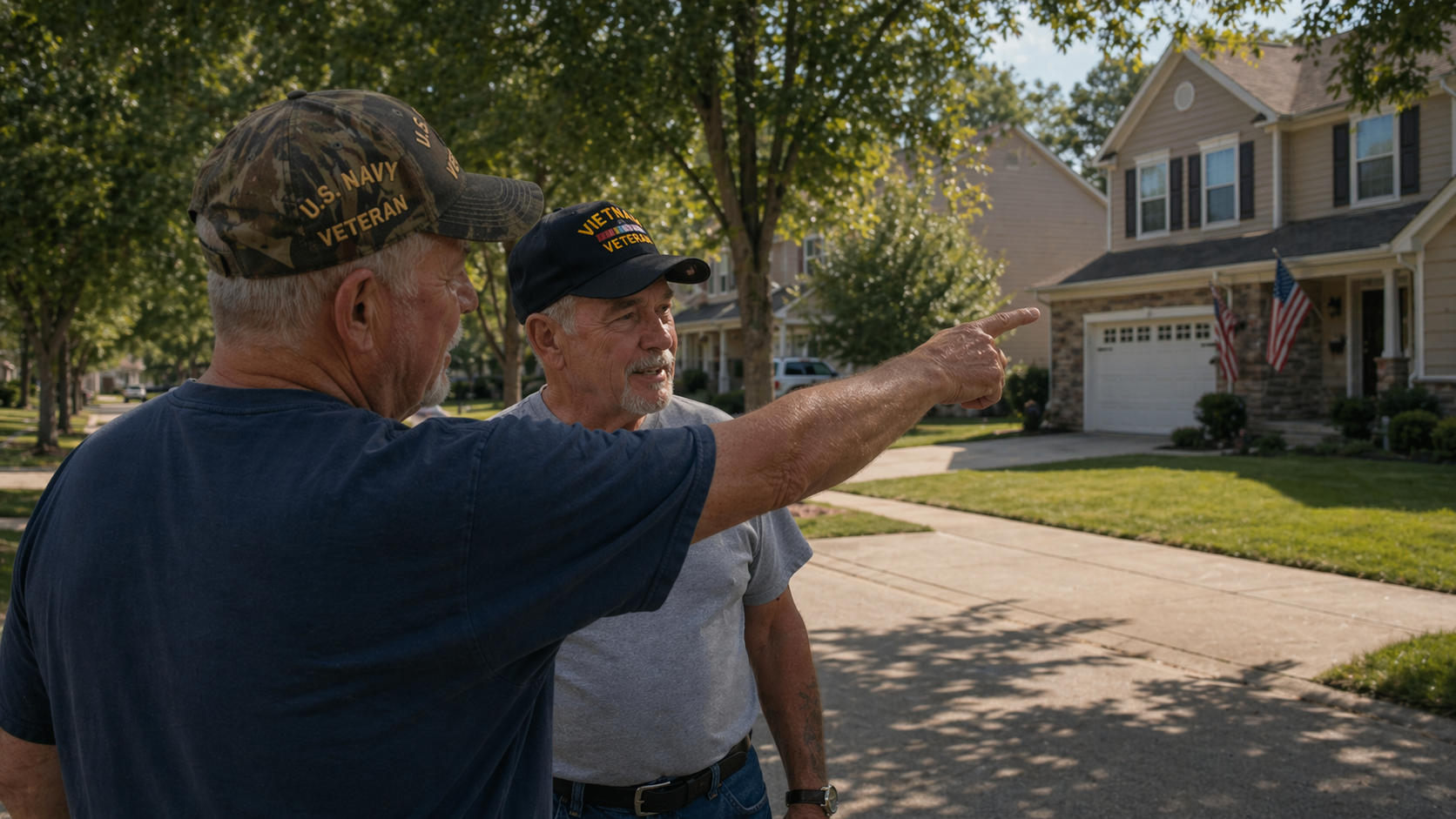
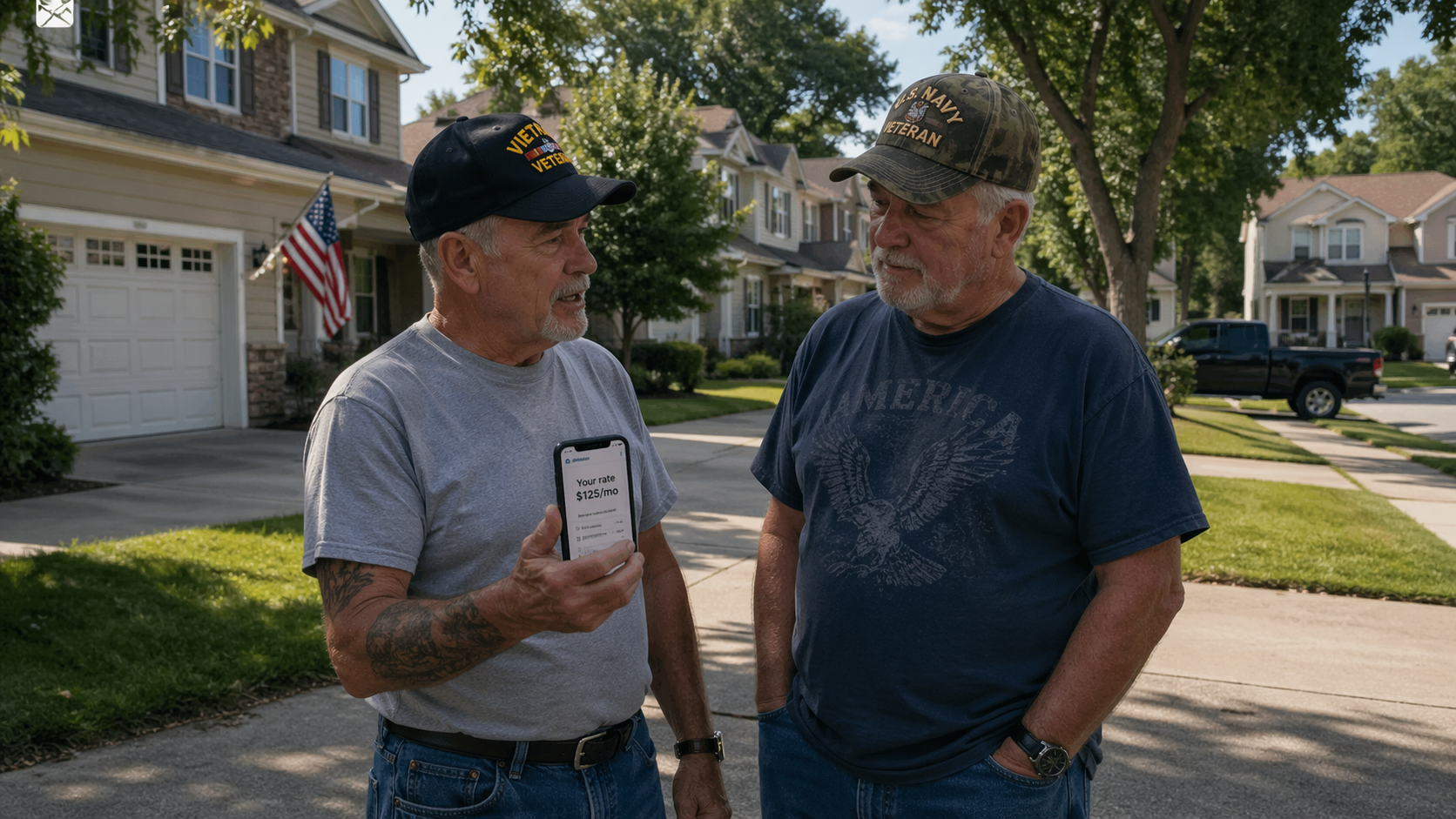
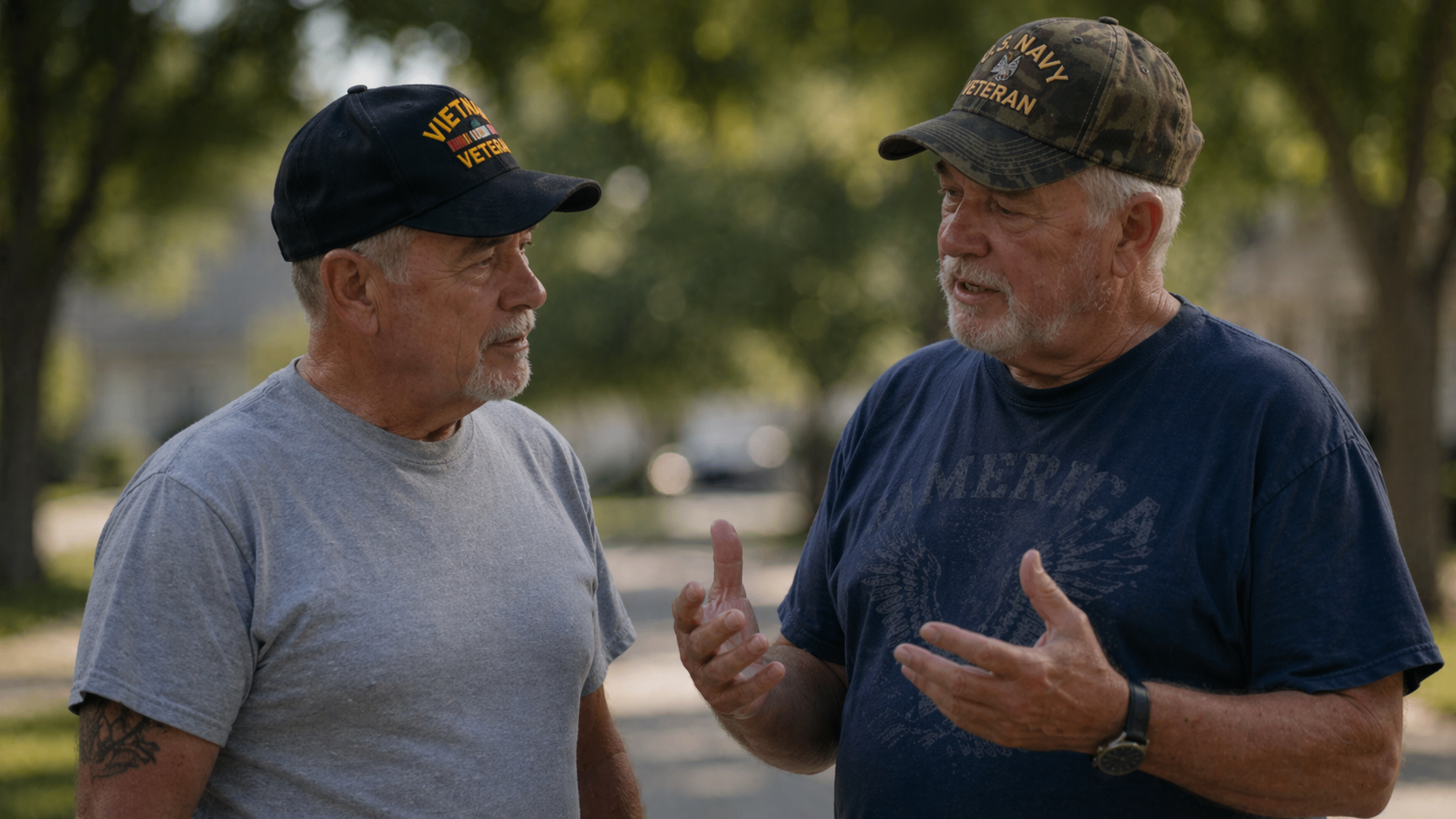
The visual structure follows the emotional arc of the spot: establish the world, initiate the tour, land the weight of the story, deliver the verdict. Each frame is a beat. The neighborhood is the argument.
Frame Structure
Frame 1: The Complaint — Wide establishing. Two veterans, driveway, neighborhood behind them.
Frame 2: The Tour — Veteran B's arm extended toward the first house. The point is the engine.
Frame 3: The Storm Detail — Both veterans facing each other. The emotional center. No houses, just the weight between them.
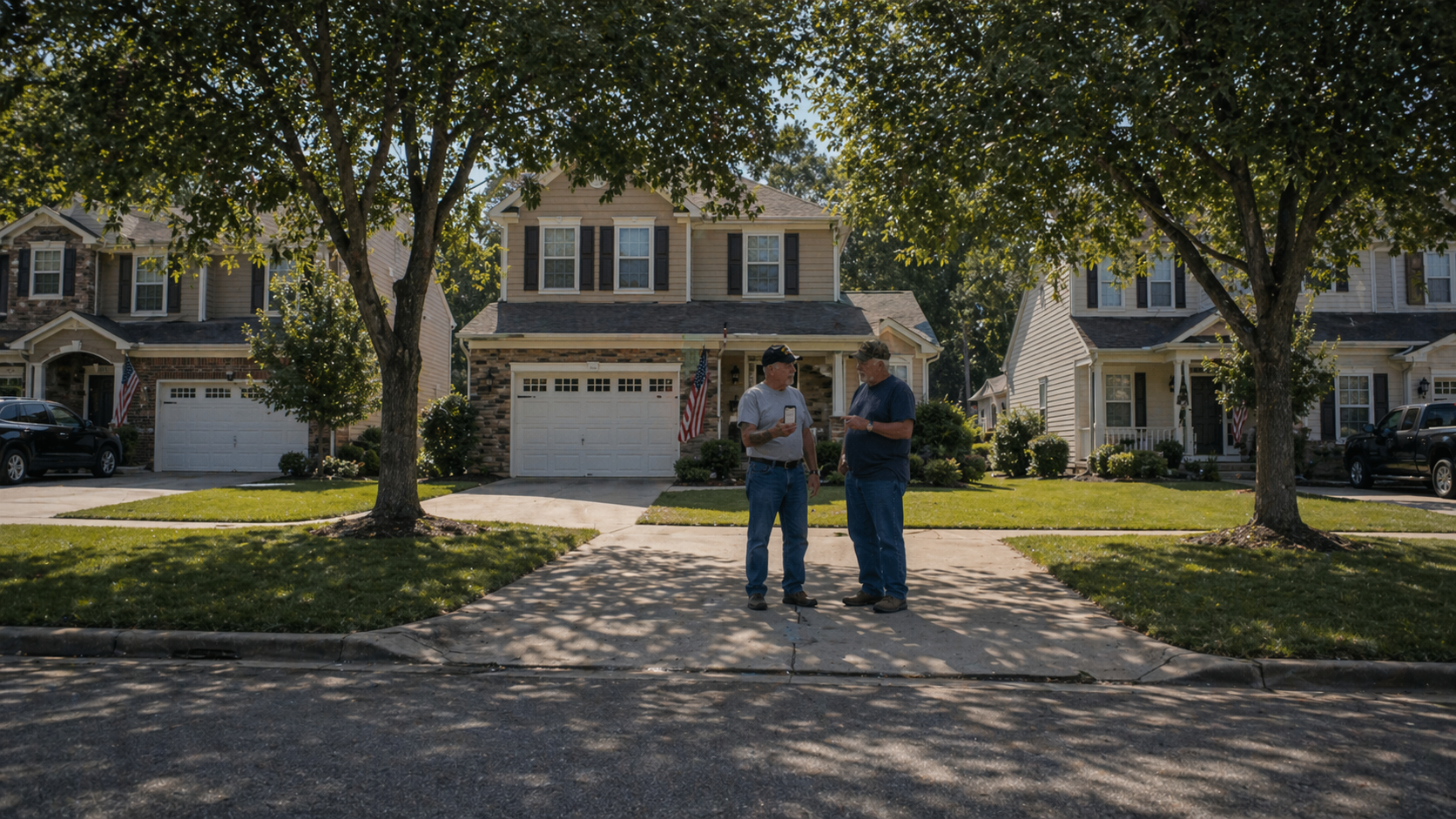
Frame 4: The Conclusion — Wide from the street. All three houses visible. The line delivered. The neighborhood as verdict.
↑ Click any frame to enlarge
The Print Execution
FRAME 4 IS THE PRINT AD.
Two veterans in a driveway. Three houses behind them. Neither looking at the camera. The neighborhood doing all the contextual work. No product shot. No rate comparison. No fine print.
"They know what it means to serve."
USAA. We know what it means to serve.
Why No Product Shot
The ad doesn't need one. The product is the outcome — family in a hotel, place signed, everything covered. The print frame shows the neighborhood that contextualized all of it. The headline is earned by the spot. The print execution assumes you've seen the spot, or makes you want to.
Why It's First and Only
NO OTHER INSURANCE BRAND CAN RUN THIS SPOT.
State Farm, Allstate, and Geico can't reference each other's slogans — USAA can, because USAA isn't in the same competitive set. Their membership requirement removes them from the standard insurance comparison entirely. They're not arguing they're better than the competition. They're arguing the competition was never built for this customer.
The three-house structure works because it's not an attack. It's a tour. Veteran B isn't angry at his neighbors' insurance companies — he feels bad for his neighbors. That's a completely different emotional register than competitive advertising, and it's the register that makes the spot feel true rather than manufactured.
The Line
The veteran delivering the concluding line is the only person qualified to say it — not because it's emotional, but because it's a direct parallel to military service. Showing up when things are hardest. Doing the job when the conditions are worst. That's not an insurance metaphor. That's a value system.
USAA is the only insurance company that can claim it without it sounding like marketing language. Because a veteran just said it first.